
Moisture is one of the biggest factors that can affect building materials, and stone veneer is no exception. Whether you’re planning a new home or updating an existing building, you want to know if stone veneer will stand up to rain, humidity, and everyday wear. To help you answer questions, we asked Jamie Lynch, sales manager at Prestige Stone, to answer your questions on stone veneer and moisture, and how veneer holds up in different conditions.
Does veneer eventually lose adhesion in high moisture areas?
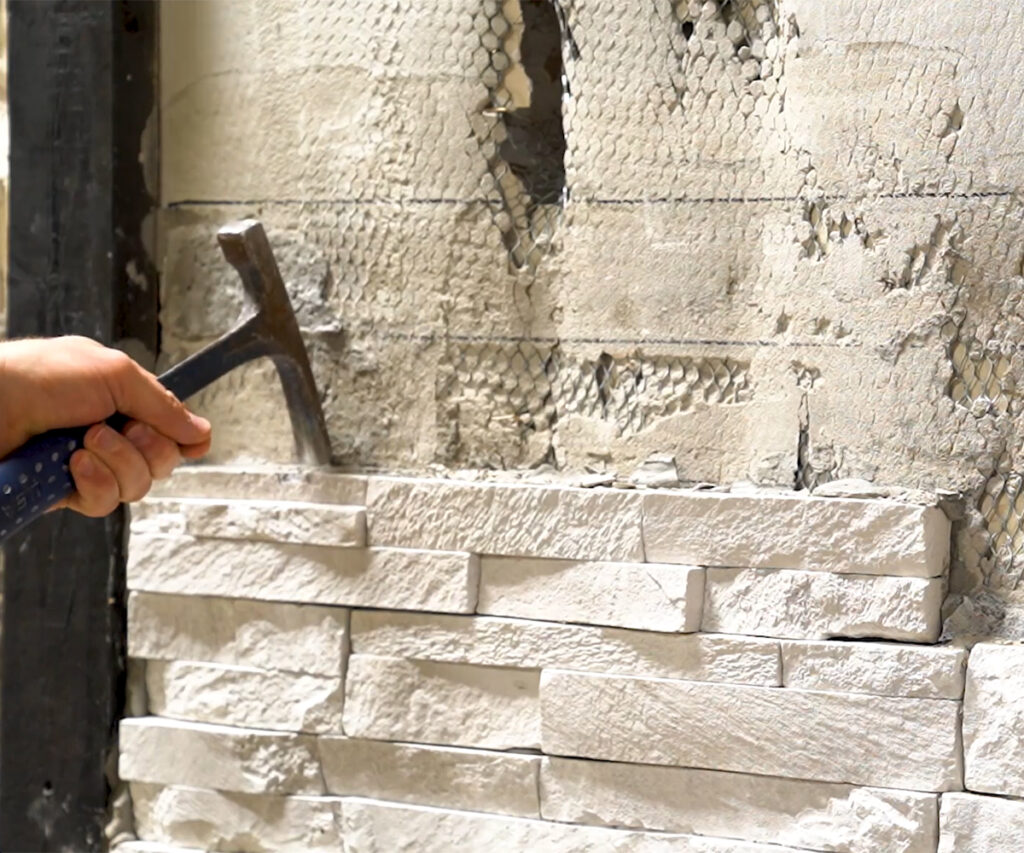
Whether veneer eventually loses adhesion in high moisture areas depends primarily on the installation. The system behind the stone is key to making it last. Prestige Stone sells nationwide but are aware of how different climates affect their stone.
Lynch explains, “Especially in the northern climate, where freeze-thaw cycles are an issue, moisture can start to puddle up in channels behind the stone. The stone needs to be put up with a solid system with flashing present.” Incorrect installation is the most common reason veneer fails.
Prestige Stone offers a fifty-year warranty. “If it’s poured right,” Lynch assures, “the stone is going to last for a very, very long time.” When stone falls off a building, he checks whether the fault lies in defective stone or poor installation. They’ll pull off sections to look behind the stone. Since masons deal with many variables like rain, humidity, and timing, mistakes in installation are often the cause of the problems.
Prestige Stone warrants the color and the stone itself, not the installation. Even though they work through dealers, they still care about the success of their product. The owner, Paul Miller, began as a mason, and their business model reflects care and ownership of the finished product. They work hard to be available for phone calls from customers with their products.
Does heavy rainfall cause damage to veneer?
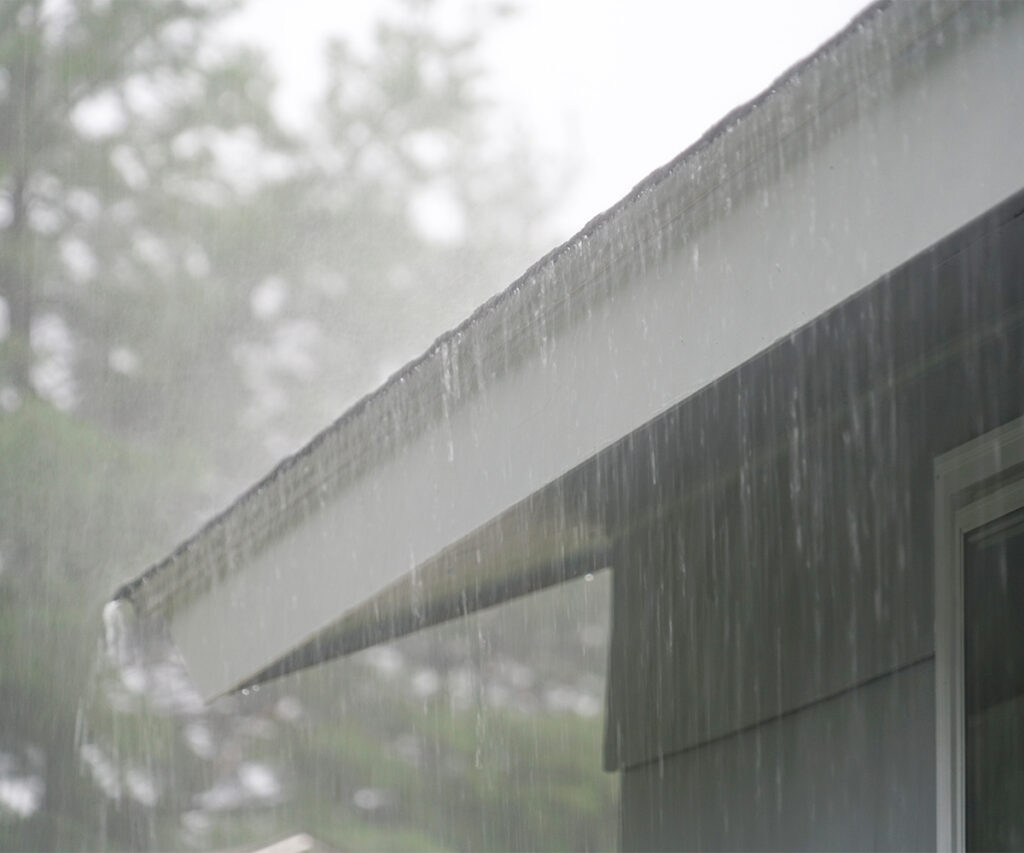
No. Stone has been used in construction for centuries. Both natural and manufactured stones absorb a limited amount of water. This means heavy rain does not damage veneer any more than light rain does.
Does stone veneer hold up to constant water exposure?
Lynch doesn’t recommend veneer around pools or showers. Constant water wears away the surface, exposing aggregate beneath. Eventually, the aesthetics will be compromised. Pool chemicals can also weaken adhesion and damage the stone, especially during freeze-thaw cycles.
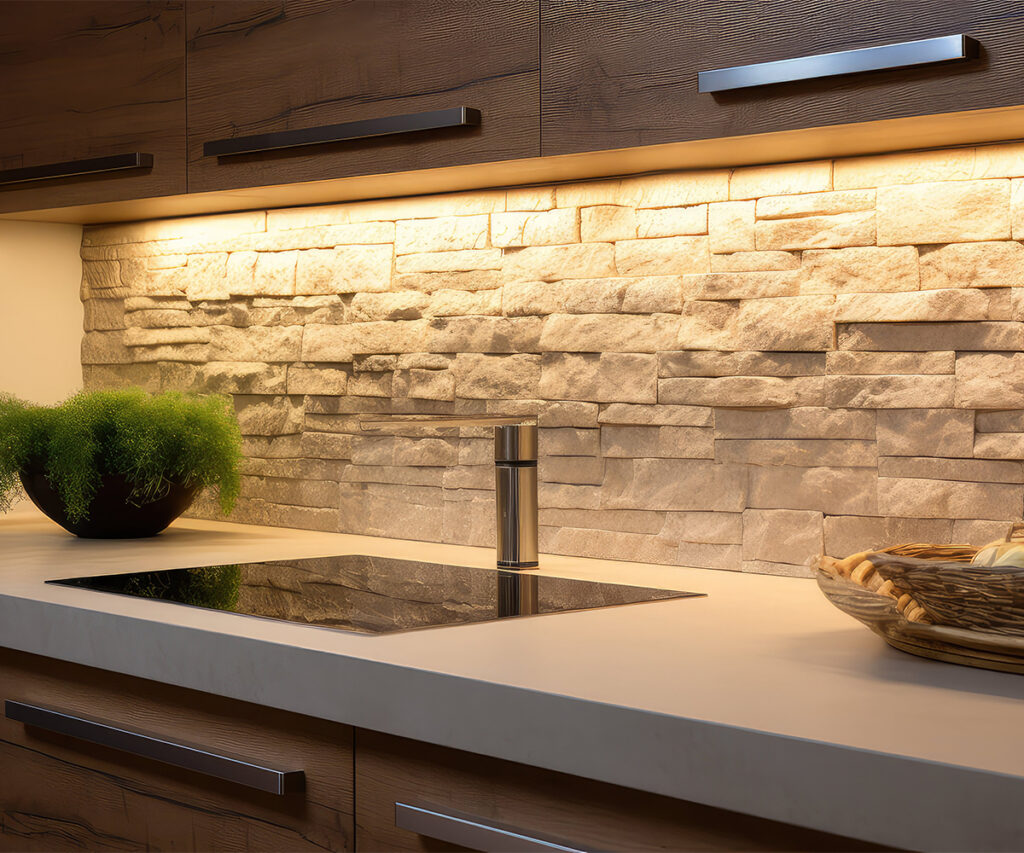
Stone veneer works well in kitchens, particularly for backsplashes. It can handle small amounts of grease, but homeowners are asked to avoid cleaning with wire brushes. Instead, Lynch recommends using water, a mild non-acidic soap like Dial, and a bristle brush.
For interior walls that collect dirt, Lynch suggests using a sealer. When used outdoors, he only advises using water-based sealers because oil-based ones can make stone look shiny and artificial. Most homeowners prefer a natural look. Prestige does not cover stones treated with oil-based sealers.
How is stone protected from moisture?
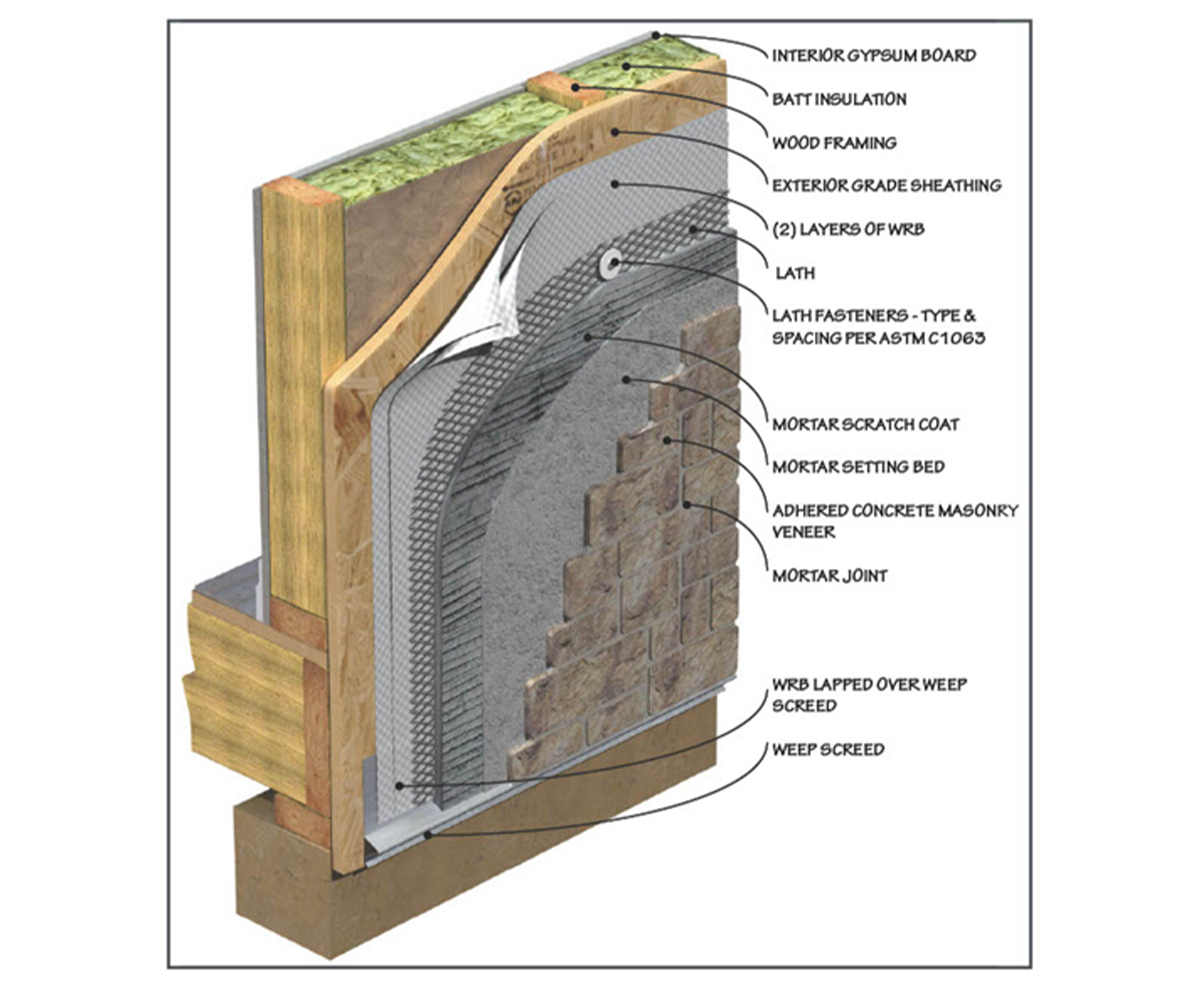
The simple answer, Lynch says, is to create the right system. Stones are designed for a ½-inch grout joint, which bonds to the scratch coat behind it and helps prevent channels where water could collect. Flashing is also important, since it directs any water that gets behind the veneer safely away from the wall.
Prestige makes thinner profile stones, listed as Pro-Stack. These taper instead of having a flat back. Masons apply mortar to the back before setting them, but this design creates more chances for wetness to get through.
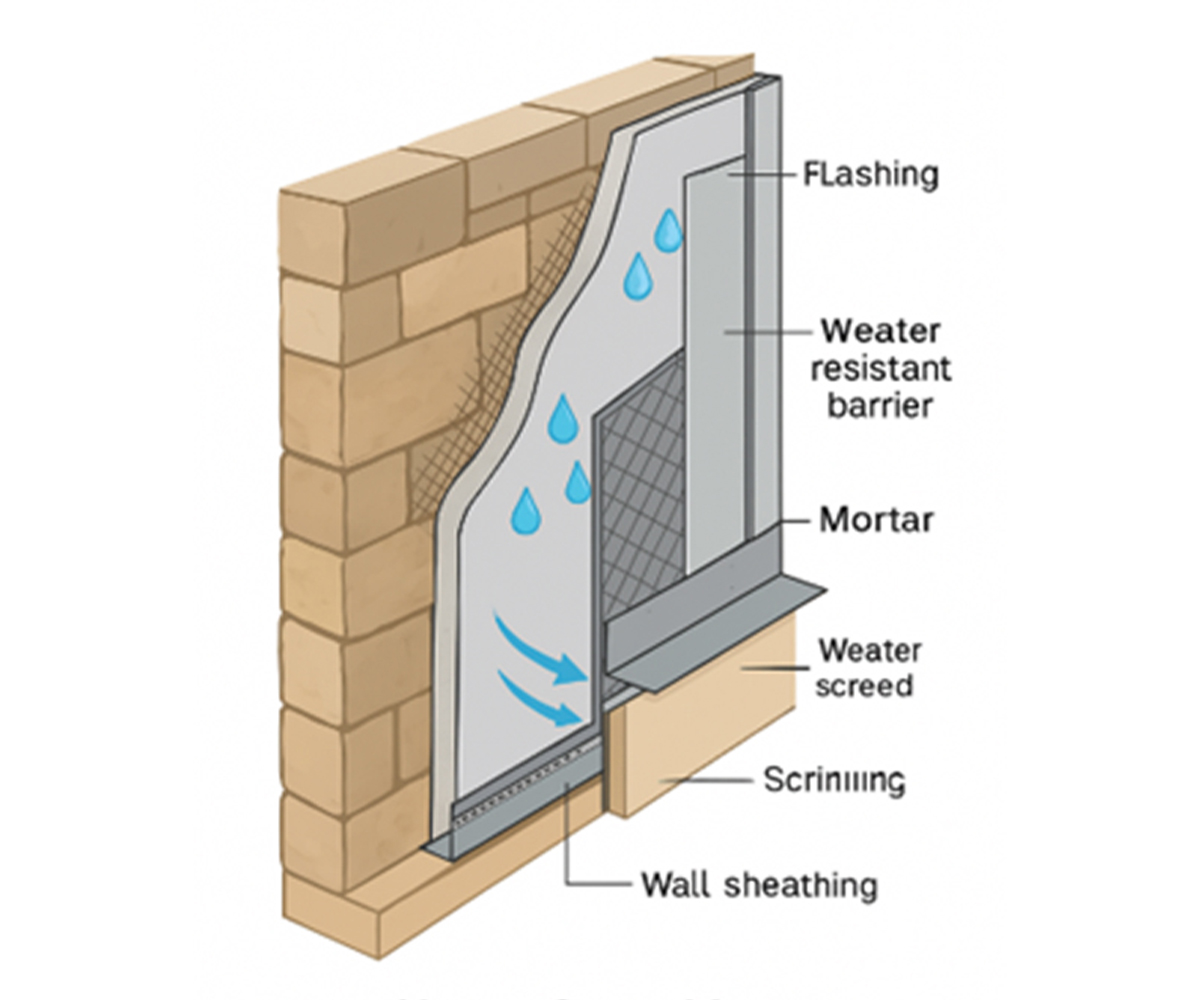
Weather during installation matters, too. High humidity or cold temperatures below 40⁰ F make it harder for stone to bond to the wall. Lynch stresses the importance of giving masons time to work in good weather. Taking special precautions in heat and cold will preserve your stone for decades.
Why does new stone sometimes look different?
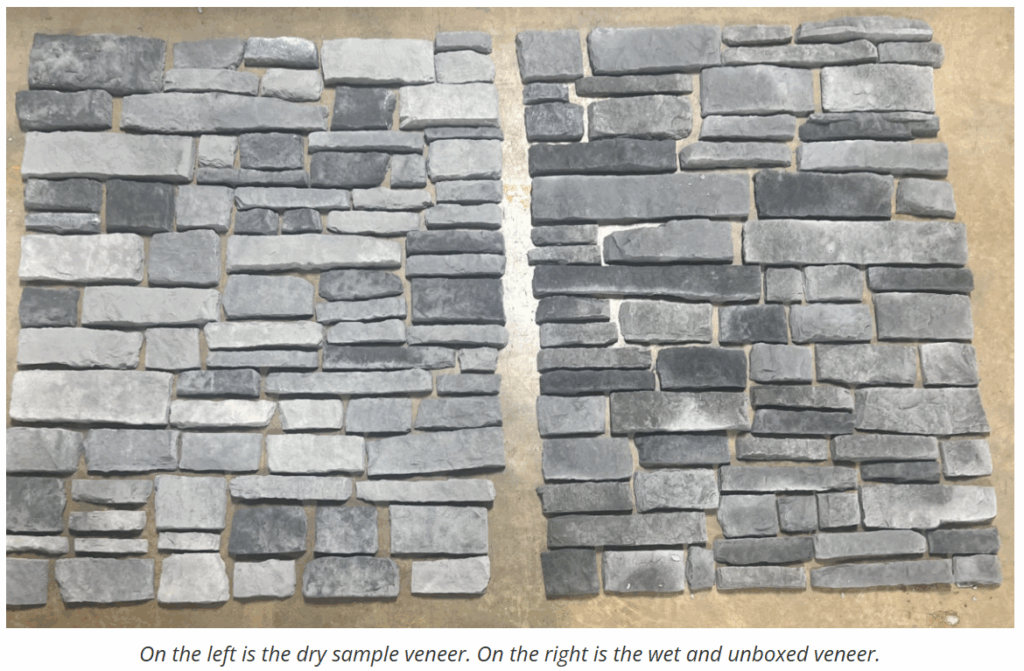
Many questions about moisture come right after homeowners open their boxes of stone. Molded stone is made with water. After packaging, evaporation and reabsorption create a “greenhouse effect,” so the stone may look darker or uneven in color.
When a homeowner chooses the stone, they view dry showroom samples in picture or in person. Recently unboxed stones may look different, causing many questions. “If they’re pulling it out of the boxes, and it’s raining or there are a lot of shadows,” Lynch warns, “Then it might take longer for the color to match what they saw in the samples.” To adjust, masons often let stones sit outside for a day or two until the color matches the samples.
For faster results, Lynch proposes using a hand-held heater, fan, or air dryer on a small portion of the new stone. While color may shift slightly, it’s normal for the stone to change during curing.
Conclusion
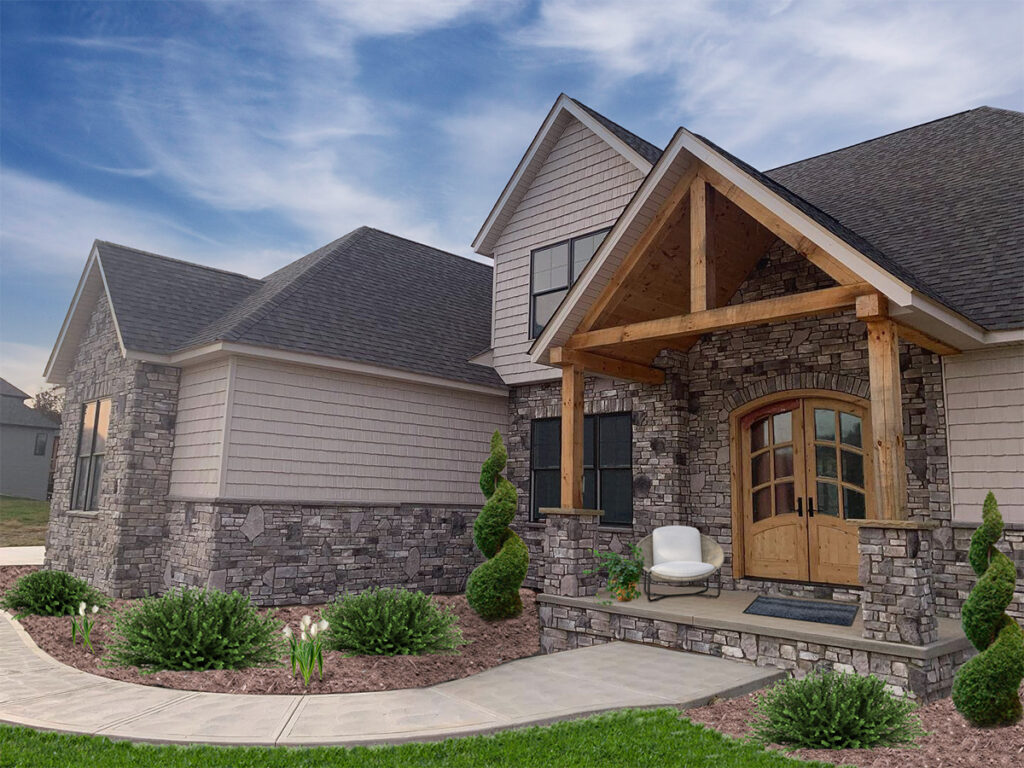
By now, we’ve looked at typical moisture, outside and inside, and how stone veneer holds up in different circumstances. Learning about the manufacturing and installation processes will help you understand how stone changes over time, especially when you first unbox it. We hope this Q&A gave you clarity on what to expect from stone veneer in real-world conditions. The main takeaway? Moisture doesn’t have to be a worry if you plan well and follow expert advice.
More From the Blog
Color Trend: Why Neutrals are Shifting from Grays to Creams
Gray had a long run. But if your home feels a little cold or flat lately, you’re not imagining it—design…
Stone Veneer vs. Quarried Stone
Stone is a beautiful feature for any home. Whether you’re aspiring to have a home with stone features or are…
New Veneer: Entering Another Dimension
At Prestige Stone, our goal is to continue building up a great foundation of stone veneer products. We want to design molds…